Case Study
Advanced BIM Implementation & Digital Twin Strategy
Owner-side BIM coordination for a 500,000+ sqm convention and office complex across architecture, structure, and MEP.
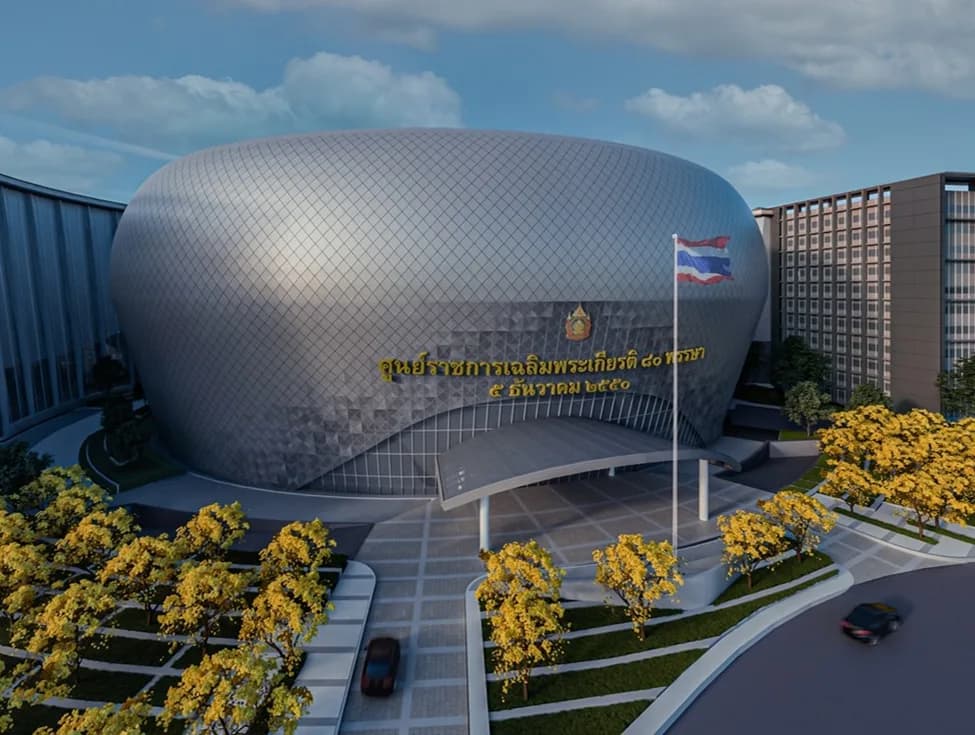
BIM coordination across architecture, structure, and MEP was fragmented across disciplines. A federated model structure was imposed, centralizing clash resolution, quantity verification, and documentation outputs. Model information was aligned across disciplines.
Executive Summary
A 600,000+ sqm convention and office complex required BIM coordination across architecture, structure, and MEP. The project lacked a consistent coordination structure, leading to unresolved clashes, inconsistent model outputs, and delays. A federated model structure was introduced to align disciplines. Clash resolution, quantity verification, and documentation outputs were standardized, improving coordination reliability.
Project Snapshot
- Client
- Dhanarak Asset Development Co., Ltd.
- Location
- Bangkok, Thailand
- Site Area
- Over 600,000 sqm
- Contract Value
- Over USD 570 million
- Duration
- 30 months (design through construction documentation)
- Services Delivered
- BIM Management, 3D / 4D / 5D Modeling, Clash Detection, Digital Twin Data Preparation, BIM Execution Plan (BEP)
The Challenge
The context, constraints, and risks shaping the project from the start.
The project required coordination of architecture, structure, and dense MEP systems within constrained ceiling spaces under an aggressive delivery schedule. This created a high risk of clashes and rework.
Complexity
- Curved façade and structural geometry
- High-density MEP systems within limited ceiling space
- Tight construction phasing with limited tolerance for rework
- Large stakeholder group requiring consistent information
What Was at Stake
Without coordinated models and verified quantity data, the project faced schedule delays, cost overruns exceeding 10% of the MEP package, and operational inefficiencies.
How Chenla Stepped In
The targeted actions we took to resolve the core issues.
A federated BIM coordination structure was imposed, positioning the coordinated model as the reference.
Key Actions
- Defined BIM Execution Plan (BEP) for coordination across disciplines
- Enforced LOD, naming, and classification standards
- Structured weekly clash-resolution cycles to close coordination issues before documentation
- Centralized model-based quantity extraction for cost verification
- Structured model data for facility management handover
Framework in Action
The Canopy Framework™ principles most active on this project.
The coordination principles later formalized into internal methods can be seen here. Over 500 critical clashes were identified and resolved before construction. The federated model aligned architecture, structure, and MEP through coordination cycles.
Upstream Intervention
“Catch it on paper, not on site.”
Coordination as the System
“Shape the terrain so the right path is the easy path.”
Solution Highlights
What Chenla delivered to address the project's challenges.
Federated Coordination Model
Architecture, structure, and MEP were integrated into a single coordinated model.
3D Cost Integration
Model elements were linked to quantity data for verification.
Constructability-Ready Outputs
Coordinated drawings and documentation were generated from the model.
Digital Model Handover
The as-built model was structured for facility management.
Outcomes
What changed for the client as a direct result of our intervention.
Operational Results
- Over 500 critical clashes resolved before construction
- Reduced rework from coordination conflicts
- Reduced RFI volume by approximately 35%
- Shortened coordination cycles
Client Benefits
- Lower construction risk
- Improved cost predictability
- Structured documentation for operations
- Verified model available for post-handover use
PROJECT DOCUMENTATION & OUTPUTS
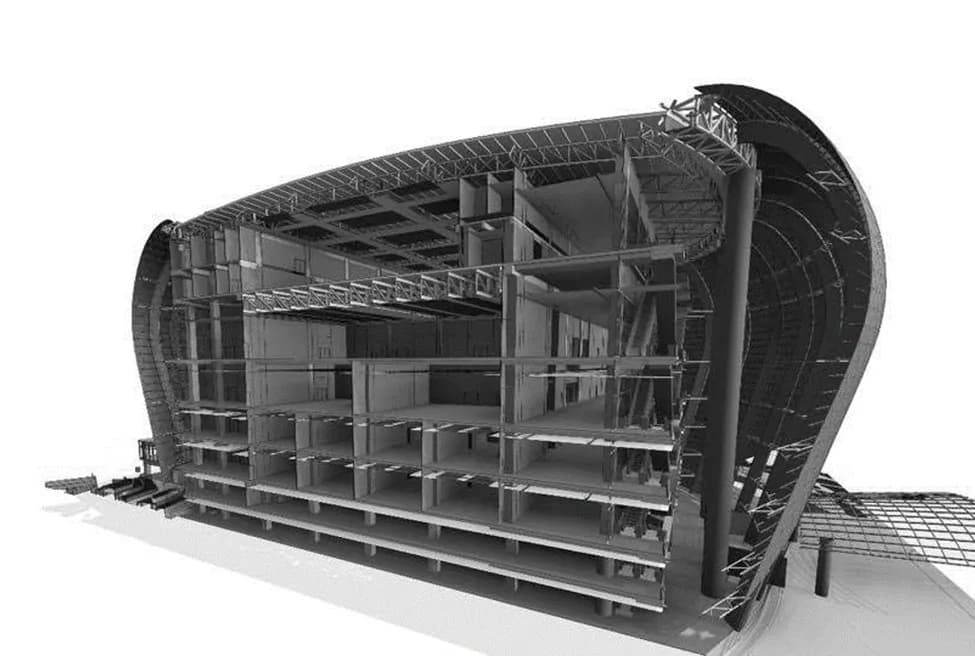
Federated BIM Coordination
Coordinated model of architecture, structure, and MEP.
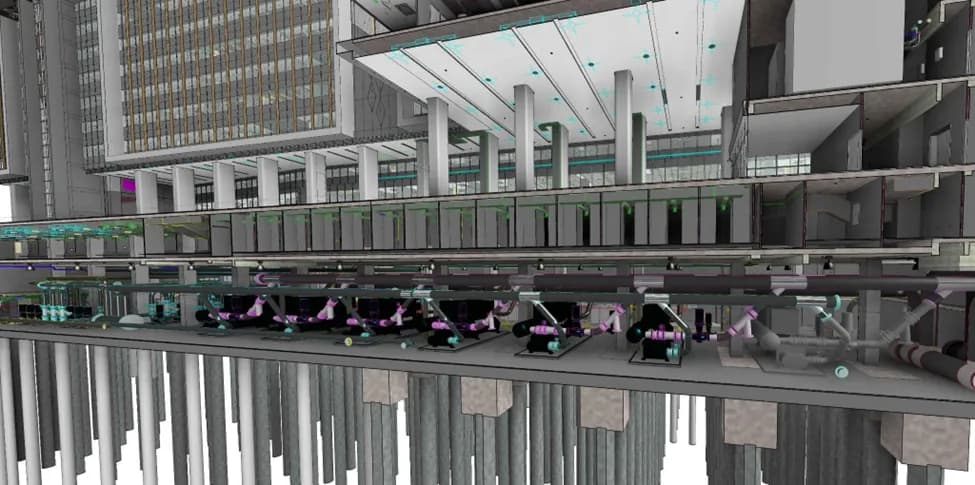
MEP Coordination Below Slab
MEP coordinated beneath the main structure.
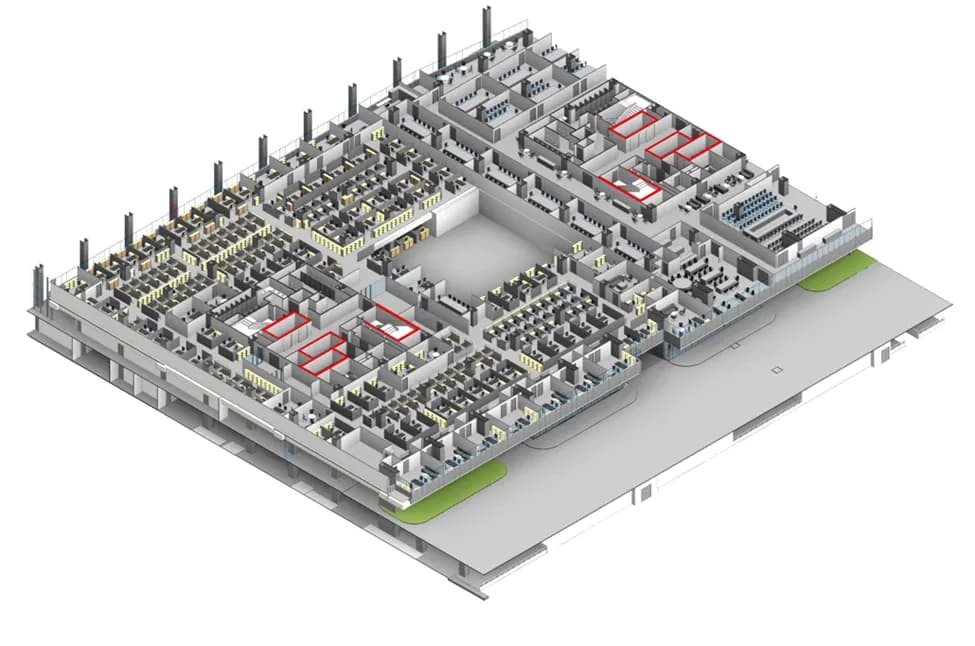
Digital Model
Model structured for quantity take-off and facility management.